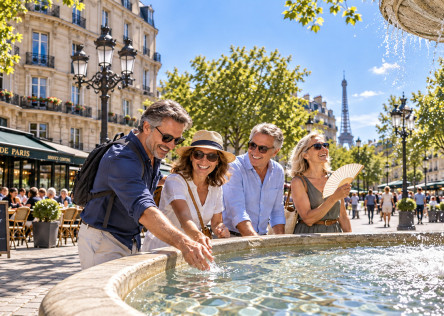
Many travelers – especially those who have already been to France before – already have an idea of which parts they’d like to explore. Even so, they often ask us for guidance and suggestions when they reach out to us, which, as France-based local experts, we’re only too happy to provide!
Deciding exactly where to go and in which order, how to get there, and how long to spend in each place is often the most difficult part of planning. With so many regions, each with its own identity, landscapes, and traditions, it’s easy to feel pulled in too many directions. It may also be hard to decide which regions combine well for a single trip.
After nearly 30 years of living in France, and now designing self-guided driving itineraries across France for international travelers, I believe that the most memorable trips come from choosing regions that suit how you like to travel – your pace, your interests, and the season you’re visiting. This guide to the best regions to visit in France is designed to help you do exactly that.

©
Traveler review from Bill & Jean Ann
How to Choose Where to Go in France
Before settling on specific regions, I encourage you to think through a few practical questions:
- How fast do you want to travel?
Fewer regions usually means fewer changes of accommodation and more time to immerse yourself in each place and the surrounding areas. - What landscapes do you enjoy most?
Vineyards, coastline, mountains, medieval towns, or lively cities? - What experiences matter most to you?
History, food and wine, markets, museums, walking, gardens, trying new activities? - What time of year are you traveling?
Seasonality affects crowd levels, weather, and the kinds of activities you’ll be able to do. Our favorite months in France are May, June, September and October.
Once these priorities are clear, choosing where to go in France becomes simpler.
The Best Regions to Visit in France
All of the following regions are worth visiting, for different reasons. I've included what we consider to be the ‘best bits’ of each region, so you can decide which to prioritize for your next France trip. You'll also see which are the closest regions, so you see which ones could easily be combined for a single trip.

©
Shaund, CC BY-SA 4.0
Paris: Art, Neighborhood Life & Culture
Paris is compact compared to most major world cities. Many of the neighborhoods travelers want to explore, including Le Marais, Saint-Germain, the Latin Quarter, and the Louvre area, are close enough to reach on foot or with a very short metro ride.
- Highlights: Le Marais neighborhood, the Louvre or Musée d’Orsay, Eiffel Tower, walks along the Seine
- Ideal for: First-time visitors, art and culture lovers, big exhibitions, architecture enthusiasts
- Hidden gem: The Promenade Plantée, an elevated green walkway built on a former railway line, offers a peaceful way to see a quieter side of Paris away from the riverbanks.
- Insider tip: Walking between nearby neighborhoods often takes less time than using the metro once you factor in stairs and connections.
- Closest regions: Normandy, Loire Valley, Champagne. Paris sits at the center of northern France, making it easy to pair with nearby historic and wine regions.


Normandy: WWII History & Rural Landscapes
Normandy is shaped by its coastline and farmland, with towns that feel grounded in daily life rather than tourism.
- Highlights: D-Day beaches, Bayeux, Mont Saint Michel, Honfleur, Monet’s garden, Étretat cliffs
- Ideal for: History buffs, families tracing WWII ancestry
- Hidden gem: The Pays d’Auge countryside is dotted with half-timbered villages and small cider farms that feel far removed from the main tourist routes.
- Insider tip: It is worth visiting the D-Day sites with a knowledgeable local guide, who can tell you more about the events that happened at each place, and add context to what you’re seeing. They can also do some research on a family member, if you have a loved one who fought in WWII.
- Closest regions: Paris (Île-de-France), Brittany, Loire Valley. Normandy works well as part of a northern France loop or combined with Paris.


Brittany: Tides, Coastlines & Strong Identity
Brittany has a fiercely proud regional identity and a coastline shaped by some of the strongest tides in Europe.
- Highlights: Saint-Malo, Pink Granite Coast, Carnac standing stones
- Ideal for: Walkers, nature lovers, seafood enthusiasts
- Hidden gem: The Crozon Peninsula offers rugged cliffs, quiet beaches, and dramatic coastal paths with far fewer visitors than Brittany’s better-known spots.
- Insider tip: Plan coastal walks around low tide, when beaches stretch farther out and hidden coves become accessible.
- Closest regions: Normandy, Loire Valley. Brittany pairs naturally with other western regions for a coastal-focused trip.


Loire Valley: Castles, Gardens & Easy Driving
The Loire Valley is gentle and green, with short driving distances and a relaxed rhythm that suits many travelers.
- Highlights: Chenonceau, Amboise, Villandry gardens
- Ideal for: Garden lovers, wine enthusiasts, Renaissance history fans
- Hidden gem: Château de l’Islette is a privately owned château and far quieter than its famous neighbors. It is closely associated with sculptors Auguste Rodin and Camille Claudel, who sometimes stayed and worked there in the 1890s during a secret and tumultuous relationship that coincided with one of the most productive periods of their artistic lives. The garden is dotted with benches and includes a small lake, making it a pleasant place to pause for a picnic.
- Insider tip: Visiting château gardens first often means fewer crowds – and the most impactful parts of most castles are the exteriors.
- Closest regions: Paris (Île-de-France), Normandy, Brittany. Its central location makes the Loire Valley easy to combine with both Paris and western France.


Dordogne: Medieval Villages & Prehistoric Sites
Dordogne is wonderfully unhurried, known for its river valleys, medieval towns, and remarkable prehistoric heritage.
- Highlights: Sarlat, La Roque-Gageac, Font-de-Gaume cave, Lascaux IV (replica cave)
- Ideal for: History lovers, scenic drivers, food-focused travelers
- Hidden gem: Rouffignac cave allows visitors to explore deep underground by electric train, revealing prehistoric drawings far from the busy sites.
- Insider tip: The Font-de-Gaume cave is one of the last caves with polychrome cave art still open to the public. Entry is limited to a small number of visitors each day, so be sure to book your tickets in advance, or get there early on the day you want to visit.
- Closest regions: Bordeaux, Loire Valley, Carcassonne. Dordogne fits well into a slower-paced southwest itinerary.


Provence: Markets, Villages & Southern Light
Provence works particularly well for travelers who enjoy being outside - browsing markets, people-watching from café terraces in village squares, and exploring Roman sites or lavender fields between meals.
- Highlights: Avignon, Aix-en-Provence, Les Baux-de-Provence, Arles, Provençal markets
- Ideal for: Food lovers, photographers, sun-seekers
- Hidden gem: A private outdoor cooking class by the vineyards with Chef Benoit offers a hands-on way to experience Provençal cuisine and local wines; we can arrange this for our booked travelers.
- Insider tip: Arriving early at popular villages and markets will make finding a parking spot easier. When you book one of our Provence tours, we will share all our preferred parking spots in each place we recommend.
- Closest regions: French Riviera, Lyon, Carcassonne. Provence connects naturally with southern France’s cities, coast, and countryside.


French Riviera: Coastal Walks & Hilltop Towns
Beyond the busy beaches and the glitz and glamor of popular places like Nice, Cannes and Monaco, the Riviera offers excellent walking paths, museums, and peaceful villages just inland.
- Highlights: Nice’s old town, the Matisse and Chagall museums, Menton’s seafront, the Exotic Garden of Èze
- Ideal for: Art lovers, walkers, those who enjoy panoramic views of Mediterranean scenery
- Hidden gem: Mougins village and the gardens of Villa Ephrussi provide culture and views without the crowds found along the coast.
- Insider tip: The coastal path between Saint-Jean-Cap-Ferrat and Beaulieu-sur-Mer is one of the Riviera’s most scenic walks.
- Closest regions: Provence, Lyon, Northern Italy. The Riviera is easily combined with inland Provence for variety. Many travelers like to combine a trip to the French Riviera with Northern Italy, as it is just across the border.


Lyon: Food Culture & Historic Neighborhoods
Lyon is one of France’s major cities and is widely regarded as the country’s gastronomic capital, known for its markets, traditional bouchons, and long culinary history.
- Highlights: Vieux Lyon, Les Halles Paul Bocuse, Saône river promenades
- Ideal for: Food lovers, cultural travelers
- Hidden gem: The Croix-Rousse neighborhood, known for its village feel, silk-weavers’ history, and hidden traboules linking streets and courtyards.
- Insider tip: Look out for Lyon’s trompe-l’œil murals, especially the Mur des Canuts in the Croix-Rousse neighborhood and the Fresque des Lyonnais along the Saône. Both cover entire building façades and depict scenes from the city’s past and present.
- Closest regions: Burgundy, Provence, Champagne. Lyon sits at a crossroads between wine regions and southern France.


Burgundy: Vineyards & Tranquil Countryside
In Burgundy, short distances between villages and vineyards make it easy to explore at a relaxed pace, off the beaten track.
- Highlights: Beaune and the Hospices de Beaune, the vineyards of the Côte de Beaune and Côte de Nuits, and historic abbeys such as Fontenay Abbey and Cluny Abbey
- Ideal for: Wine lovers, cyclists, travelers seeking quiet landscapes
- Hidden gem: A half-day jeep tour through lesser-known vineyards with wine experts allows our travelers to access wineries most tours can’t reach; we can book this for our travelers on our Burgundy tours
- Insider tip: For travelers who like to cycle, the Voie des Vignes is a pleasant option for a short ride through the vineyards, away from busy roads
- Closest regions: Lyon, Champagne, Alsace. Burgundy links northern and eastern France through wine-focused routes.


Champagne: Vineyards & Chalk Cellars
Champagne feels surprisingly compact, with vineyard villages and major towns close together, making it easy to explore without long drives. Beneath Reims, houses such as Ruinart and Taittinger age their wines in vast chalk cellars - known as crayères - originally dug by the Romans and stretching for miles below the city.
- Highlights: Reims cathedral, vineyard walks, cellar visits
- Ideal for: Sparkling wine enthusiasts, couples
- Hidden gem: Smaller villages around Hautvillers offer intimate tastings and a quieter atmosphere than the big-name houses.
- Insider tip: The crayères - ancient Roman chalk cellars beneath Reims - are cool, silent, and UNESCO-listed, allowing you to see how Champagne is aged.
- Closest regions: Paris (Île-de-France), Burgundy, Alsace. Champagne is an easy extension from Paris or eastern France.


Bordeaux: Wine, Coast & Historic Towns
Bordeaux combines a walkable historic center with elegant 18th-century architecture, world-class vineyards, and easy access to the Atlantic coast.
- Highlights: Bordeaux city, Saint-Émilion, Médoc estates, Atlantic beaches
- Ideal for: Wine lovers, travelers who enjoy city-and-coast combinations
- Hidden gem: Fresh oysters at Arcachon Bay, best enjoyed simply with lemon and local white wine.
- Insider tip: Driving is the easiest way to explore the Bordeaux vineyards, as many estates are spread out and not well served by public transport. Our Bordeaux itineraries help you do this - we will tailor yours to suit your preferences.
- Closest regions: Dordogne, Basque Country, Loire Valley. Bordeaux works well for trips that mix wine, coast, and countryside.


Basque Country: Distinct Culture & Green Coastlines
Stretching across the French-Spanish border, the Basque Country has a strong regional identity, with its own language, traditions, and cuisine.
- Highlights: Biarritz, Bayonne, Saint-Jean-de-Luz, coastal paths
- Ideal for: Food lovers, walkers, culture-focused travelers
- Hidden gem: Ainhoa or Sare, traditional inland villages that show the region’s architectural and cultural roots.
- Insider tip: Eating inland rather than along the seafront usually means better value and more local dishes.
- Closest regions: Bordeaux, Spanish Basque Country, Dordogne. The Basque Country combines easily with southwest France or northern Spain.


Alsace: Wine Route & Layered History
Alsace blends French and German influences shaped by centuries of shifting borders, with colorful half-timbered villages along the Alsace Wine Route that feel as though they belong in a Brothers Grimm tale.
- Highlights: Colmar, Strasbourg, wine route villages, vineyards
- Ideal for: Wine lovers, photographers, history-minded travelers
- Hidden gem: Turckheim, a lesser-known wine village with a war museum that explains how WWII and the Nazi occupation uniquely affected Alsace and its people.
- Insider tip: Visiting villages early in the morning offers softer light and fewer tour groups. We recommend Colmar as an excellent base for exploring Alsace.
- Closest regions: Champagne, Burgundy, Germany (Black Forest). Alsace pairs well with other eastern regions, and many travelers like to combine it with a trip across the border to Germany.


Carcassonne: Fortified Cities & Cathar History
Carcassonne pairs a famous medieval fortress with the peace and quiet of the stunning Cathar countryside and vineyards.
- Highlights: The Walled City, Cathar castles, Minervois wines
- Ideal for: Medieval history enthusiasts
- Hidden gem: The four castles of Lastours, set on a rocky ridge north of Carcassonne, offer dramatic views and a deeper look at Cathar history without the crowds of La Cité.
- Insider tip: Visiting La Cité of Carcassonne after dinner, when the ramparts are illuminated and day-trippers have left, offers a much calmer and more atmospheric experience.
- Closest regions: Dordogne, Provence, Bordeaux. Carcassonne works well within a southern France historical route.


Lille: Flemish Influence & Northern Culture
Lille sits close to the Belgian border and has a strong Flemish influence, visible in its brick architecture, hearty cuisine, and lively market culture.
- Highlights: Vieux-Lille (Old Town), the Marché de Wazemmes, and the Palais des Beaux-Arts
- Ideal for: Museum lovers, travelers who enjoy walkable cities, and those curious about regional culture
- Hidden gem: The Marché de Wazemmes, a bustling local market best visited on a weekday morning, when it’s busy but not overwhelming.
- Insider tip: Take a short trip to Roubaix to visit La Piscine, a former Art Deco swimming pool turned museum - one of the most unusual and rewarding museums in northern France.
- Closest regions: Paris (Île-de-France), Belgium (Flanders), The Somme. If you’re interested in WWI history, you can combine a tour of the WWI battlefields and memorials in the Somme, Verdun, and Belgium.


Verdun: WWI History & Remembrance
Verdun lies in eastern France, close to the borders with Germany and Luxembourg, and is one of the most significant sites of WWI remembrance in the country.
- Highlights: Douaumont Ossuary, Fort de Douaumont, Verdun Memorial Museum
- Ideal for: Travelers interested in WWI history, remembrance, and the French experience of the war
- Hidden gem: Fleury-devant-Douaumont, one of the villages destroyed during the Battle of Verdun and never rebuilt, marked today by simple signposts and memorials.
- Insider tip: Allow time to drive through the forested battlefield area - the landscape still bears visible scars from shelling, which helps put the scale of the fighting into perspective.
- Closest regions: Champagne, Alsace, The Somme. Verdun combines well with other WWI remembrance sites in eastern and northern France.


The Somme: WWI Battlefields & Allied History
The Somme is located in northern France and is particularly meaningful for British, Australian, and Canadian travelers, though American visitors with a broader interest in WWI often find it valuable for understanding the scale and conditions of the war.
- Highlights: Thiepval Memorial, Lochnagar Crater, Circuit of Remembrance
- Ideal for: Travelers interested in Allied WWI history and battlefield visits
- Hidden gem: The Lochnagar Crater near La Boisselle, best visited early in the day when it’s quiet and the scale of the explosion is most striking.
- Insider tip: The Circuit of Remembrance scenic drive offers a well-paced way to visit several key sites without feeling rushed or overwhelmed.
- Closest regions: Lille, Paris (Île-de-France), Verdun. The Somme forms part of a broader northern France WWI history route.


How Many Regions Should You Combine?
One of the most common planning mistakes we see is trying to fit too much into one trip. France is rewarding, but distances, driving time, and energy levels matter more than many travelers expect.
As a general guideline:
7–10 days: 1-2 regions
This works well if you want time to settle in and explore without feeling rushed.
Sample itineraries
- Normandy’s Seaside & Hinterland - Normandy (8 days)
- A Royal Journey in the Loire Valley - Loire Valley (8 days)
- Paris City & the Norman Countryside - Paris & Normandy (8 days)
- From Paris to Provence on the Back Roads - Burgundy & Provence (8 days)
- Hidden Beauties of the Southeast of France - Provence & the French Riviera (10 days)
10–16 days: 2–3 regions
This is a comfortable pace for most first-time travelers, allowing for variety without constant packing.
Sample itineraries
- Heritage, Wine & Back Roads - Paris, Normandy & Loire Valley (10 days)
- Focus on Northeastern France - Burgundy, Alsace & Champagne (10 days)
- A Genuine Trip to the South West of France - Carcassonne, Basque Country & Dordogne (13 days)
- A Real Taste of France - Paris, Provence & the French Riviera (16 days)
- Normandy, Brittany & the Loire Valley Loop - Normandy, Brittany & The Loire Valley (16 days)
- The Best of Eastern France - Paris, Alsace, Burgundy, Lyon & Provence (16 days)
3-4 weeks: 3–5 regions
With more time, you can include longer stays and slower transitions between regions.
Sample itineraries
- From Paris to Nice at your own pace - Paris, Burgundy, Provence & French Riviera (20 days)
- Traditions and Heritage of the Southwest of France - Bordeaux, Basque Country, Carcassonne & Dordogne (20 days)
- From Provence to Paris: Immersion into the ‘real’ France - Provence, Basque Country, Dordogne, Loire Valley & Paris (26 days)
- The Many Facets of France - Burgundy, Dordogne, Bordeaux, Loire Valley & Normandy (26 days)
‘So which regions should I choose?’
There is no single “best” region in France - only the regions that suit you best. When you travel at a comfortable pace and choose regions that align with your interests, days feel less rushed and you’re able to appreciate the details that make each place distinct.
If you’d like help choosing where to go and how to combine regions to create the ideal itinerary just for you, we warmly invite you to contact us.
We’d be happy to design a personalized self-drive itinerary that reflects your wishes and interests. You’re welcome to browse our France tour packages (all of which can be customized just for you), reach out to Emilie and Laura at travel@france-justforyou.com with questions, or complete our trip-planning form below!