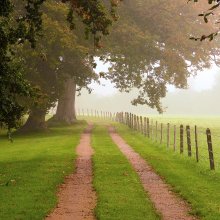
The best time to visit Normandy is May, June*, September, and October, when the weather is usually comfortable, the landscapes are beautiful, and the busiest summer crowds are easier to avoid.
The weather in Normandy is influenced by its location on the English Channel, so it tends to be changeable all year round. At any time of year you might experience beautiful weather or very bad weather. However, late spring, early summer, and early fall generally offer the best balance of comfortable temperatures for sightseeing, walking, and cycling.
If your priority is D-Day history, gardens, coastal scenery, food, or a relaxed self-guided driving tour of Normandy, the best month will depend on what you most want to experience. Below, we’ll help you decide which time of year is best for your trip based on the weather, crowds, seasonal highlights, and the experiences you’re most interested in.
We’ve been designing personalized self-drive tours in France for more than 15 years, so these recommendations are based on first-hand experience of the region throughout the seasons.

©
Unsplash CC0
Best Time to Visit Normandy At a Glance
- Best overall — May, June, September, and October
- Best for D-Day anniversary events — June
- Best for gardens — April, May, and June
- Best for warmest weather — July and August
- Best for fewer crowds — May, September, and October
- Best for cider, Calvados, and local food — September and October
Best Time to Visit Normandy Based on Your Interests
- For gardens and flowers (including Monet’s Garden at Giverny) — April to October, especially late spring and early summer
- For coastal walks and outdoor sightseeing — May, June, September, and October
- For cider, Calvados, and local food — September and October

©
Normandy by Month
January and February (winter)
We generally don’t recommend visiting Normandy in January and February. In the winter, the advantage is that there are fewer tourists, so the most popular places will be much quieter than at other times of year. However, the temperatures can get down to freezing, and the weather is wet and windy in general.
Furthermore, some of the region's attractions and museums close during January or have shorter opening times.
March and April (early spring)
Late March and April can be a nice time to visit Normandy, with slightly milder temperatures, more hours of daylight, and spring wildflowers starting to bloom across the region.
Early spring weather in Normandy can be unpredictable and changeable. Pack for cooler temperatures and bring clothing you can layer in case you’re lucky with the weather.
Spring is a lovely time for exploring Normandy’s backroads with stops at charming villages like Beuvron-en-Auge and Lyons-la-Forêt.
Trying some Norman delicacies is a must too! Trouville-sur-Mer has the best fish market in the area, and you can enjoy a delicious meal of fresh fish at Les Affiches restaurant. To practice cooking some of these delicacies yourself, we can arrange for our travelers to do a private cooking class with local expert Chef Brigitte. She will be very happy to share her best cooking tips with you as you prepare a typical Norman dish.
See the iconic abbey of Mont Saint Michel with fewer visitors than later in the spring and summer. For an amazing view and photo opportunities, you should head towards Avranches to get to the Pointe du Grouin du Sud. The view across the bay with the mount floating in the distance is stunning.

©
Unsplash CC0
May (spring)
May is the ideal time of year for a Normandy road trip and outdoor sightseeing, with comfortable temperatures around 18°C/64°F.
If you enjoy visiting gardens, we warmly recommend a visit to Monet's gardens in Giverny at this time of year, when the tulips are in full bloom. If you book one of our driving tours of Normandy, we’ll include skip-the-line tickets to visit Monet’s garden, and advise on the best times to visit to avoid the tourist crowds.
In addition to Monet’s gardens, there are various other beautiful gardens in Normandy that are open to the public. These include les Jardins d’Etretat, a garden and open-air gallery that combines structured plants and topiaries with contemporary art. The gardens also have an amazing view of the famous cliffs of Etretat.
If you like French formal gardens and topiaries, a stop at the Château de Brécy near Bayeux is also a must. These gardens have remained almost unchanged since the 17th century.
And of course, May is a wonderful time to visit Normandy’s many lovely off-the-beaten track villages. Less than half an hour’s drive from Bayeux is the charming town of Isigny-sur-Mer. At Les Halles d’Isigny, you can find delicious edible souvenirs, including salted butter caramels that melt in the mouth.
Other coastal towns we love to recommend include Honfleur with its gorgeous harbor, and Trouville-sur-Mer, a wonderful place to eat fresh seafood.

©
Unsplash CC0
June (early summer)
The long June days make it a lovely time to explore France by car, including all the places we’ve already mentioned.
If you’re a history buff, you might think of visiting the D-Day landing beaches around the anniversary on June 6th. However, we don’t really recommend this, as the area will be heaving with tourists, there will be special events to mark the occasion which you may or may not be able to participate in, and there will be road closures.
But after the anniversary has passed, the typically warmer weather (although you can never guarantee this in Normandy!) makes it a pleasant time to explore both the coastal areas and further inland.
If you’re interested in learning more about WWII history in this area, we can arrange for expert local guide Christophe, or one of the other brilliant guides we work with, to give you a private tour of the D-Day beaches and WWII sites.

©
Liz & Robin
July and August (mid-summer)
Normandy doesn’t tend to get the extremely hot temperatures that other parts of France experience in the high summer. The temperature tends to hover around 22°C/72°F, although it can get much hotter during a heatwave, with temperatures reaching the mid 30s/90s.
This is an extremely busy time for tourism, particularly in August, when domestic tourism is at its highest and French people are on vacation. It’s not the best time to visit Normandy in terms of tourist numbers, as the most popular places, such as Mont St Michel, Monet’s garden in Giverny, and the D-Day beaches, will be at their busiest.
If you’re in France on Bastille Day on July 14th, expect celebrations and fireworks all over France. This is the anniversary of the event that triggered the beginning of the French Revolution in 1789.

©
Unsplash CC0
September and October (late summer/early fall)
September can be a very pleasant time to enjoy Normandy, as the weather will still be mild and the summer tourist crowds will have gone. On a sunny day, explore the white chalk cliffs of Étretat or relax on the sandy beaches of Deauville, Trouville or Cabourg.
It’s also a great time to discover Normandy’s cider route, as this is when the apple harvest starts. We’ll share with you our favorite distilleries, where you can try the famous Calvados apple brandy, and local cider.
The most popular tourist sites, such as Mont St Michel, will be less congested and therefore more pleasant to explore. We can arrange for you to do a tour with a local guide, who will explain the history of the area and take you to places on and around the islet that avoid the crowds.
The Normandy Impressionist Festival, which runs from late March through the last week of September may also be interesting for art-lovers. There are special exhibitions at the Musée des Impressionnismes in Giverny (ideal to combine with a visit to Monet’s House and Garden) and the Musée des Beaux-Arts in Rouen. Check the website for the details and dates!
If you’re in Rouen in September, you mustn’t miss the stunning light show on the facade of Rouen Cathedral, which starts at 9.30pm on Fridays and Saturdays, and runs till the last Saturday in September.
Of course, once we get into October, the fall colors across rural Normandy are a photographer’s dream. We’ll share with you all of our favorite and most scenic driving routes when you book a tour of Normandy with us!
October is also when the weather starts getting colder and wetter again in Normandy, so be sure to bring layers and waterproof clothing just in case.

©
Unsplash CC0
November and December (winter)
The short days and cold, wet and windy winter weather mean that November and December aren’t the best months to visit Normandy. December is the region’s rainiest month so unless you’re lucky with the weather, it’s not a great time for outdoor activities.
It may be a good time to focus on indoor activities, such as visiting museums and enjoying some fine dining.
In Bayeux, you can see the Bayeux Tapestry in all its glory at the Bayeux Tapestry Museum. Other places of interest include the Museum of the Battle of Normandy in Bayeux, Bayeux Cathedral, the Eugene Boudin museum in Honfleur, and various museums dedicated to the history of WWII in the region.
Late November and December is the season for Christmas markets in France! This is the perfect time for you to buy Christmas gifts and authentic souvenirs from Normandy. Some well-known markets that run through December are in Caen and Rouen.
There are also many festivities in smaller towns and villages that take place during a few days in December.
The Christmas market at Saint-Pierre-en-Auge is always and only held on the second weekend in December and has been described as the most beautiful Christmas market in Normandy. It’s held inside the stunning medieval market hall, which is also worth visiting on Monday mornings for its market.
A few days before Christmas, there will be Christmas chalets around the old harbor in Honfleur and during the week before Christmas there will be a market and festivities in Bayeux.
Be sure to check the dates and times of the markets while planning your Christmas market itinerary!

©
Unsplash CC0
So to summarize, the best time to visit Normandy is in May, June, September, and October when you can generally enjoy comfortable temperatures, gorgeous landscapes, and smaller crowds.
If you’re interested in doing a self guided tour of Normandy, contact us with your questions or wishlist, email us at travel@france-justforyou.com, or complete our trip planning Typeform below!
We would love to help plan your dream trip to France!
Send us your France trip planning form
FAQs
Can I combine Normandy with Paris in one trip?
Yes — in fact, many travelers choose to start in Paris and then continue west. A thoughtfully planned Paris and Normandy trip allows you to experience both iconic city landmarks and the historic Normandy coastline without feeling rushed.
How many days do you need in Normandy?
We recommend spending at least 4 to 5 days in Normandy so you have enough time to visit the D-Day beaches, Bayeux, Honfleur, Rouen, and Mont Saint-Michel without rushing. If you enjoy gardens, local food, or scenic coastal walks, you’ll appreciate having a little longer.
A Normandy road trip is the best way to explore the region at your own pace, allowing you to discover charming villages and countryside that are difficult to reach by public transportation.
What is the rainiest month in Normandy?
Normandy can experience rain at any time of year because of its location on the English Channel, but late fall and winter (November through February) are generally the wettest seasons.
Rain usually comes in short showers rather than lasting all day, so it’s still possible to enjoy sightseeing with a waterproof jacket. If you’re hoping for the best balance of comfortable weather and fewer crowds, we generally recommend visiting in May, June, September, or October.
Is September a good time to visit Normandy?
Yes. September is one of the best months to visit Normandy. The weather is usually mild, the summer crowds have begun to ease, and attractions remain open. It’s an excellent time to explore the D-Day beaches, enjoy coastal walks, visit cider producers during the apple harvest, and discover picturesque towns such as Honfleur and Bayeux.
If you’re looking for inspiration, see our guide to the best places to visit in Normandy.
What is the best way to tour Normandy?
The best way to tour Normandy is by car. Having your own vehicle gives you the flexibility to explore the D-Day landing beaches, dramatic coastline, medieval towns, and rural countryside at your own pace.
Many of Normandy’s most memorable places are difficult to reach by train or bus, and driving allows you to discover smaller villages and local producers along the way.
If you’d rather not plan everything yourself, our personalized Normandy tours include carefully designed self-drive itineraries, hand-picked accommodations, and local recommendations.