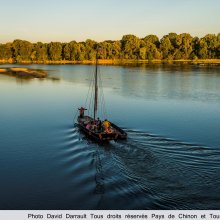
A northern France road trip is ideal for travelers who want history, coastal scenery, charming towns and easy driving routes from Paris at a relaxed pace.
When someone tells me they're interested in doing a Northern France road trip, the first thing I ask is which specific regions or places they’re thinking of.
People picture very different things when they think of Northern France. Some are thinking of Paris and Normandy, including the D-Day beaches and maybe Mont-Saint-Michel.
Others have Brittany in mind too (which many would think of as Western France), or the Loire Valley with its châteaux.
And then there are travelers who are looking at Lille, the Somme, or even the Alsace region, which is technically in the northeast but comes up a lot in these conversations.
They're all valid options — but they don't all necessarily belong in the same trip. This will depend on your interests and the length of your trip. Trying to combine too many of them into too short a time frame is what most often turns a great trip into an exhausting one.
Below are a few routes that are popular with France Just For You’s travelers. Each one has a different feel, and choosing the right one based on your priorities, interests, and trip length makes the entire trip easier.


How Long Do You Need for a Northern France Road Trip?
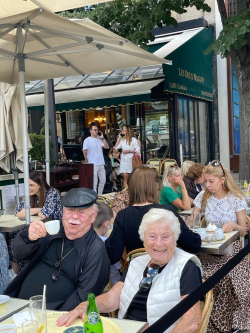
How long you plan to spend in France will shape your entire Northern France itinerary. You should allow yourself enough time to explore a few key places that you’re particularly interested in at a comfortable pace. This is a much better (and more relaxing) option than having a lot of quick stops and spending more time on the road than you’d like.
Here are some tips:
- 7–8 days: Paris + one region (usually Normandy)
- 10–14 days: Paris + two regions
- 2+ weeks: 3 regions in more depth (or 4+ regions depending on the exact trip length)
A simple rule: if you have an itinerary where you’d be changing accommodation every night or spending many hours each day driving, you’re trying to do too much.
In my experience, the trips that work best are the ones where you stay two or three nights in each place. This gives you the chance to immerse yourself in the local area and culture, and get to know your B&B hosts!
Three Northern France Road Trip Itineraries
Each of these routes starts in Paris and takes you in a different direction, with a different balance of scenery, history, and pace.
Route 1: Paris to Normandy and Brittany
Paris → Giverny → Honfleur → Etretat → Deauville/Trouville → Bayeux & D-Day beaches → Mont-Saint-Michel → Saint-Malo → Brittany coast
The classic coastal route, with WWII history, pretty harbor towns, and some of the best seafood in France. If that sounds like your kind of trip, this is the itinerary for you.
Normandy and Brittany together give you a real range of experiences along the Atlantic coast. The drive between the two passes through Mont-Saint-Michel and beautiful Saint-Malo.
Brittany has a distinct culture from the rest of France, along with a dramatic, stunning coastline, its own cuisine, its own language (many of the signs are in French and Breton).
My view is that Brittany deserves at least three or four nights to do it justice. If you don't have that time, you're better off doing Normandy properly and perhaps Saint-Malo (not far from Mont Saint-Michel), and saving the rest of Brittany for another trip.
Most travelers pick up their car from the outskirts of Paris to avoid driving through the city, and head west.


Giverny is a natural first stop. It’s only about an hour from Paris, and Monet's house and gardens are gorgeous, especially in late spring or early summer when everything is in bloom, or you may enjoy its fall colors in September/October. It’s a lovely way to break up the drive to Normandy as you adjust to driving in France. From Giverny, you may drive northwest toward the coast.
Honfleur is a pretty town with good restaurants and a picturesque harbor. It gets busy in peak season, but it is worth a stop.
A short drive further north takes you to the white cliffs at Etretat, which are one of the most striking stretches of coastline in France. Rather than just taking a quick photo stop, it's worth walking along the clifftops to stretch your legs and appreciate the views.


From there, you may follow the coast down toward Deauville or its neighbor Trouville. Deauville is the more polished, glamorous seaside town; Trouville has a more low-key, everyday French feel. I tend to prefer Trouville, but either is worth a stop.
Continuing west, you reach Bayeux, a lovely small town and the most practical base for visiting the D-Day landing beaches. The beaches cover a wide stretch of coast, so it's worth giving yourself at least a full day, ideally with a knowledgeable guide who can bring the history to life. If you're planning this part of your trip, our D-Day landing beaches guide gives a helpful overview, which may help you decide which specific areas to visit.
Bayeux is also associated with the famous medieval Bayeux tapestry (which is on loan to the British museum in London till 2027). It is much more impressive in real life than most people expect.

©
Unsplash CC0
The last major stop before Brittany is Mont-Saint-Michel. It's one of the most extraordinary places in France, and timing matters more than people realize. Arriving at midday in summer means crowds.
You should also check the tides before you visit – at high tide in the spring, the island can be completely surrounded by water and may be temporarily inaccessible for an hour or two if the causeway is flooded.
We advise our travelers to visit first thing in the morning, or late afternoon/early evening, when the day-trippers and tour buses have left. This makes an enormous difference.


Once you cross into Brittany, you’ll notice that the landscape changes. The coastline becomes rougher and more rugged, the towns have a strong maritime identity, and the culture feels quite distinct from the rest of France.
Saint-Malo, with its walled old town right on the water, is the natural first stop. But Brittany has much more to offer beyond Saint-Malo.
The Emerald Coast between Saint-Malo and Cap Fréhel is dramatic in a different way, with big open views and windswept headlands.
The Pink Granite Coast around Perros-Guirec and Ploumanac'h is extraordinary — huge rounded boulders in shades of pink and orange piled along the shoreline, unlike anything else in France.
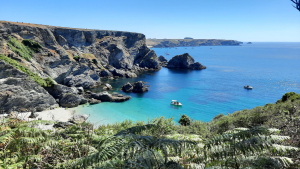
And further south, the Gulf of Morbihan, a sheltered inland bay dotted with small islands, has a quieter, warmer character that a lot of our travelers end up loving.
How long does this route take?
Most of our travelers spend 10 to 12 days — typically 2 to 3 nights along the Normandy coast, a night or two near Mont-Saint-Michel, and 3 to 4 nights exploring Brittany, plus time in Paris at the beginning or end. Two weeks gives you more breathing room, which you’ll especially appreciate in Brittany.
Tap the button below to see a sample Northern France itinerary. All our itineraries can be adapted to suit your interests and the time you have available.
Route 2: Paris, Normandy and the Loire Valley
Paris → Giverny → Honfleur → Etretat → Deauville/Trouville → Bayeux & D-Day beaches → south to the Loire Valley → Amboise or Tours → châteaux and vineyards
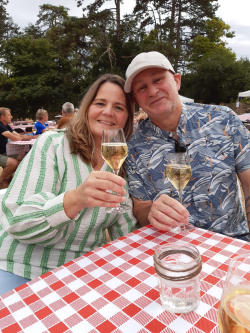
I have a personal reason for being particularly fond of this route.
My husband Jean-François is a retired French Air Force man, and when he was still serving, the family was moved regularly between bases across the country. I loved this, because it meant I got to live in several of France's most beautiful regions, including both Normandy and the Loire Valley, which is now my home. So when travelers ask me about these two regions, I'm speaking from years of living there!
It's also the route I suggest most often for a first or second trip to France, because the two regions complement each other so well.
Normandy is about bucolic countryside, lovely seaside towns, cuisine built on butter and cheese and apples, friendly locals, and the chance to visit the moving WWII sites along the coast.
The Loire Valley is about châteaux, wine, gardens, medieval villages along the rivers, and a quality of light across the landscape that seems to change by the hour.
The good news is you don't have to choose. The two regions aren't far apart and make a natural loop with Paris.
The Normandy section follows the same path as Route 1: from Paris to Giverny, then northwest to the coast — Honfleur, the Etretat cliffs, Deauville or Trouville, then on to Bayeux and the D-Day beaches. Along the way, you might also pass through some of the quieter countryside villages in the Evreux area, which give you a taste of rural Normandy that most visitors miss entirely. (You can explore this section further in our Normandy road trip guide).
Where this route diverges is after the D-Day beaches. Instead of continuing west toward Mont Saint-Michel and Brittany, you turn south into the Loire Valley.


The landscape starts to soften, the light changes, and by the time you reach the Loire you're in a completely different region of France, full of vineyards, river views, and more châteaux than you could visit in a month.
The temptation is always to see as many châteaux as possible. I understand; they all look incredible in photos. I recommend visiting two or three properly, with enough time to enjoy the grounds and the setting.
The Château de Chenonceau is the castle most travelers fall in love with. Also known as the ‘Ladies’ castle’ (find out why when you visit), it spans the Cher river, and there's something unforgettable about the setting that's hard to describe until you see it.
Chambord castle is spectacular in a completely different way, vast and almost theatrical. For our travelers that enjoy cycling, we recommend hiring bikes from Cheverny or Blois and cycling along the Loire river and through local villages to the castle.
If you want something smaller and less touristy, Château de l'Islette is one of our favorites. This privately owned château on the river Indre has beautiful grounds, ideal for a picnic lunch, and a much more intimate feel than the big-name sites. It's not far from its more famous neighbor, Azay-le-Rideau castle, and you'd be unlikely to find it on your own.

©
France Just For You
A town like Amboise is a convenient base for exploring the Loire Valley. The main châteaux and vineyards are easy day trips, and you have good restaurants and a pleasant town to come back to each evening.
If you want to explore this region further, our Loire Valley road trip guide explains how you may structure your time without rushing.
How long does this route take?
Most travelers spend 10 to 14 days — usually 3 to 4 nights along the Normandy coast, then 3 to 4 nights in the Loire Valley, plus Paris at the start or end.
If you have two weeks, you can afford to linger longer in your favorite spots. This is also a route that works well for groups — friends, two couples traveling together, or a family trip — because there's enough variety to keep everyone happy.
Route 3: Northern France Beyond Normandy (Somme, Lille, Verdun and Alsace)
Paris → the Somme (Thiepval, Beaumont-Hamel) → Lille → Verdun → Alsace (Colmar, Strasbourg, fairy-tale villages)
If World War history is your main interest, this is the route to choose.
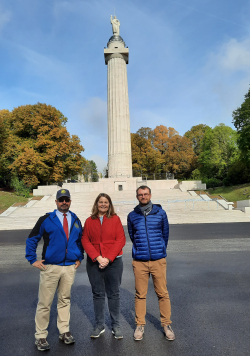
It takes you into parts of France that most tourist itineraries don’t include, and it ends in a region that looks and feels like a different country. It may also be a nice option for anyone who's already visited Normandy or the Loire Valley and likes the idea of touring Northern France by car.
The most common mistake on this route is visiting the WWI sites without an expert WWI guide to provide context. The Somme and Verdun aren't like most historical attractions, in the sense that there aren't always clear signs or obvious things to look at. Much of what happened is below the surface, or visible only if you know what you're seeing. Travelers who explore these regions without a guide may leave feeling underwhelmed. This would be a shame, because with the right guide or a well-planned visit, these are some of the most moving sites in France.
From Paris, you head north to the Somme, where some of the most significant WWI sites are concentrated. The Thiepval Memorial — with over 72,000 names of soldiers with no known grave — is not something you forget easily. The battlefields and cemeteries in this area are quiet, open, and deeply affecting.
From the Somme, you continue north to Lille, a city that often surprises visitors. The architecture is Flemish; that is, colorful, ornate, and very different from what you see in most of France. The food scene is good, the old center is beautiful, and there's a lively energy that makes it a pleasure to spend a couple of days in. Most North American visitors never see this part of France, which is one of the reasons this route feels so different from the classic trips.
After Lille, you have the option of crossing the border to Belgium if you would like to visit Flanders Fields or Ypres.


Then, you’ll head east toward Verdun. The battlefields here are on a different scale from the Somme, and, over a century later, the landscape still carries the scars of what happened. Again, having a private guide who can explain the historical events and context makes this far more meaningful than just driving through.
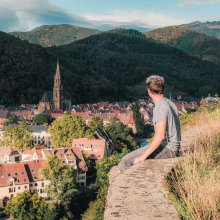
From Verdun, continue east into Alsace, yet another very different French region. With its half-timbered villages, the wine route, the Germanic influence on the architecture, food, and place names, Alsace doesn't look or feel like anywhere else in France.
Colmar is a beautiful town and a good place to use as a base. Strasbourg is a big city, so if you want to visit you may want to allow a whole day to explore. We prefer to recommend the lovely smaller wine villages, such as Riquewihr, Eguisheim, and Kaysersberg, where you really feel the character of the region. They're small enough to explore on foot in a couple of hours and many are close together, so with a car it’s possible to visit three in a day.
If Alsace is new to you, our post on our favorite villages in Alsace gives a good introduction to the region.


How long does this route take?
This one needs at least two weeks to do comfortably, because you're covering more ground, and you won’t want to rush your visits to the historical sites. Most of our travelers spend 3 nights in Paris, 2 nights in the Somme, 2 nights in Lille, 2 nights in Verdun, and 3 to 4 nights in Alsace.
This Northern France itinerary is ideal for anyone with a strong interest in World War history, whether you’re a first-time visitor or returning visitor to France.
We've planned several of these trips for families tracing a relative's WWI or WWII service, and those are always among the most meaningful we put together, for both us and, of course, our travelers. You may let us know when you book if you would like to retrace the footsteps of one of your ancestors.
Choosing the Right Route through Northern France
If you're not sure which itinerary would best suit you, it usually comes down to answering a few questions.
Are you drawn to coastal landscapes and maritime scenery?
Route 1 — Normandy and Brittany. This itinerary gives you the most time by the sea, with a real variety of coastal landscapes from the cliffs at Etretat to the Pink Granite Coast.
Do you want a mix of everything on your first or second trip to France?
Route 2 — Normandy and the Loire Valley. The combination of coast, countryside, history, and châteaux works for almost everyone, and the driving is easy.
Is World War history your main interest, or do you want to explore a part of Northern France that receives fewer visitors than other places?
Route 3 — the Somme, Lille, Verdun, and Alsace. This Northern France itinerary covers the most significant WWI sites in France (and Belgium, if you like). Even if you've never traveled outside of Paris, this route is absolutely worth considering if you’re a history buff. The sites in the Somme and Verdun are among the most powerful and moving places in the country.
It's really a question of what kind of experience you're looking for — and how much time you have.
We – expert trip planners Emilie and Laura - will be very happy to advise you on this if you’re thinking of touring Northern France by car with one of our self-drive itineraries.

When is the Best Time to Visit Northern France
May and June offer long days and comfortable weather — this is when Northern France is at its most enjoyable for driving and exploring on foot.
September and early October are normally mild and noticeably less crowded than the peak summer months. You’ll also get to enjoy the lovely fall colors, so this is another good option for exploring Northern France.
July and August are busier, especially along the Normandy coast and at popular sites like Mont-Saint-Michel and the major Loire Valley châteaux. Although these months still offer long hours of daylight and hot weather, the road traffic will be much heavier. We would recommend avoiding these months unless you have no other option.
Weather in Northern France can change quickly at any time of year, so check the forecast in advance and pack layers!
Do You Need a Car for a Northern France Road Trip?
In Paris: no. The city is best explored on foot or by public transportation, and having a car in Paris is more hassle than it's worth.
Outside Paris: yes, and it makes a real difference to the kind of trip you can have. Trains connect major cities, but they don't give you access to the places that make these routes special — D-Day beaches, countryside villages, Brittany's coastline, Alsace's villages, or WWI sites in the Somme and Verdun.
Driving also means you can stay in smaller towns and countryside B&Bs rather than limiting yourself to larger cities with train stations. Many of the accommodations we recommend aren't accessible by train — and those are often the places our travelers remember most.
We take care of car hire when you book one of our self-drive tours of France — always with automatic transmission with full insurance (unless you request otherwise).
How We Plan Northern France Road Trips at France Just For You
Every trip we design is different, because every traveler is different. We've never planned the same itinerary twice.
We start by talking to you about what you're interested in, what kind of pace you prefer, and whether there's anything specific you'd like to include — a family connection to a WWI site, a particular château, or a food experience, for example. Some travelers come to us with a clear itinerary in mind. Others just know a few places they want to visit and the kind of trip they want to have, and we help craft it from there.
Once we know what you're looking for, we put together a trip that includes:
- Carefully selected premium B&Bs and family-owned boutique hotels that we know personally and have tested ourselves — including at least one hosted dinner with your B&B hosts during the trip
- A rental car with automatic transmission and full insurance
- Pre-booked activities and private guided tours chosen based on your interests, with plenty of flexibility left in each day for you to explore at your own pace
- A personalized France Just For You travel guidebook — 200 to 300 pages compiled especially for your trip, with your full itinerary, daily suggestions, restaurant recommendations, practical tips on driving and parking, and useful French phrases and etiquette
- Access to our MyFrance travel app with driving routes linked to your preferred GPS app, e-tickets for pre-booked activities, and your full itinerary in digital form
- Support from our team while you're in France — we're just a phone call or WhatsApp message away if you need anything
A month before your trip, we send you a personal travel pack by courier with your printed guidebook, maps, tickets, and everything you need to feel prepared and confident before you set off.
You travel independently, at your own pace, with the freedom to decide how you spend each day. But you'll never have to figure out the logistics yourself.


Thinking About Your Own Northern France Road Trip?
If you're deciding between a focused trip through one region or a longer route combining two or three, we're happy to help you think it through and advise you on your options.
You can browse our self-drive France itineraries for inspiration, explore our Northern France tours, or complete our trip-planning form below to start the conversation.
You're also welcome to email us directly at travel@france-justforyou.com — we always enjoy hearing what people are dreaming about for their time in France.
Send us your France trip-planning form
FAQs
What is the best Northern France road trip route?
The most popular Northern France road trip is Paris, Normandy, and the Loire Valley over 10 to 14 days, combining history, coastline, countryside, châteaux, and manageable driving distances.
Travelers who prefer coastal scenery often continue from Normandy into Brittany instead.
Those with a strong interest in World War history may choose a route through the Somme, Verdun, and Alsace.
If you want to include the Burgundy region too (a good one for wine lovers!), you may be interested in our Northern France Must Sees & Hidden Beauties itinerary.
How many days do you need for a Northern France road trip?
Most travelers need 10 to 14 days for a Northern France road trip that comfortably combines Paris with two regions.
A focused 7-to-8-day trip through Paris and Normandy also works well if you'd rather take your time in one region than rush through several.
Is Normandy part of Northern France?
Yes. Normandy is one of the most commonly visited regions on a Northern France road trip, known for the D-Day landing beaches, Bayeux, Honfleur, and the dramatic cliffs at Etretat.
Can you include Brittany in a Northern France road trip?
Yes. Brittany pairs naturally with Normandy, with Mont-Saint-Michel sitting right on the border between the two. Allow at least 10 to 12 days if you want to include both regions, as distances in Brittany are longer than they appear on a map.
Is a Northern France road trip better by car or train?
A Northern France road trip is significantly easier by car. Trains connect major cities, but key sites like the D-Day beaches, Verdun battlefields, countryside B&Bs, and Alsace wine villages are difficult to reach without driving.
Is a Northern France road trip good for first-time visitors to France?
Yes — especially a route combining Paris, Normandy, and the Loire Valley, which gives you a well-rounded mix of city, coast, countryside, and history with manageable driving distances.
If your main interest is World War history, a route through the Somme, Verdun, and Alsace is equally suitable for a first visit.
What is the best time of year for a Northern France road trip?
May, June, and September are the most comfortable months for a Northern France road trip — long days, mild weather, and fewer crowds.
July and August are busier, with a lot more congestion on the roads, particularly along the Normandy coast and at popular sites like Mont-Saint-Michel.
Can I include Alsace in a Northern France itinerary?
Yes — many travelers extend their trip east to include an Alsace road trip, particularly if they’re interested in wine, medieval villages, or World War history in nearby regions like Verdun and the Alsace-Lorraine area.