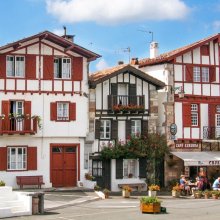
When travelers ask me about planning a Basque Country road trip, I often find they’re curious about a part of France that feels quite different from anywhere else — and that’s exactly what makes it so appealing.
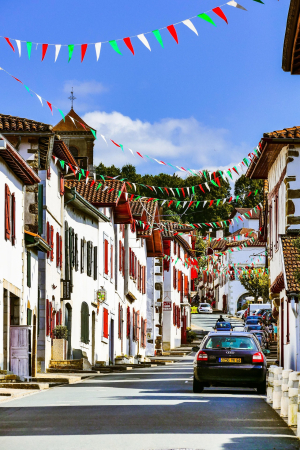
The French Basque Country, in southwestern France near the Spanish border, combines:
- An Atlantic coastline shaped by fishing and surfing traditions
- Green hills and mountain villages with strong local identity
- A food culture that’s deeply rooted in farms, markets, and family-run producers
Driving is the easiest and most flexible way to explore the region. Distances are short, but public transportation doesn’t always connect the places that make the Basque Country special.
Below is a sample 5-day Basque Country road trip itinerary to give you a sense of how the region fits together.
We hope it inspires you to visit this region!
- Day 1: Arrival in Biarritz
- Day 2: Biarritz to Saint-Jean-de-Luz
- Day 3: La Rhune and Ainhoa
- Day 4: Espelette and Saint-Jean-Pied-de-Port
- Day 5: Bayonne and the End of Your Road Trip
- Best Time for a Basque Country Road Trip
- Final Tips
Tap the button below to see our more comprehensive Basque Country tours, all of which can be adapted based on your interests and travel dates.
Day 1: Biarritz
An elegant seaside town with imperial roots
Your Basque Country road trip begins in Biarritz, a coastal town whose character is shaped by both its fishing roots and its unexpected imperial past.
Biarritz was a modest fishing village until the mid-19th century, when Empress Eugénie — the Spanish-born wife of Napoleon III, Emperor of France — chose it as her summer retreat. Her presence transformed the town into a fashionable seaside destination, attracting European aristocracy and shaping much of the architecture you still see today.
A first day in Biarritz often includes:
- A walk along the Grande Plage, where surfers share the shoreline with Belle Époque buildings, including the Hôtel du Palais, originally built as the imperial summer residence
- Views from the Rocher de la Vierge, reached by a narrow footbridge over the water, with sweeping perspectives over the Bay of Biscay
- Time at the Port des Pêcheurs, a small harbor tucked below the cliffs, where former fishermen’s huts now house a handful of simple seafood restaurants
If you enjoy walking, you might follow a short section of the coastal path south toward Bidart. Even a brief stretch gives you a sense of the rugged Atlantic coastline that defines this part of the Basque Country.
We will advise travelers on how much time to spend along the coast versus in town, depending on the season and how busy the beaches are likely to be. We share these recommendations, along with practical timing tips, in the personal guidebook we create for each trip.


Day 2: Biarritz to Saint-Jean-de-Luz
Coastal villages and a working harbor
The coastal drive south from Biarritz is short but scenic, passing through villages like Bidart and Guéthary before reaching Saint-Jean-de-Luz.
Saint-Jean-de-Luz feels more low-key than Biarritz and is easy to explore on foot. Many travelers enjoy:
- Walking around the active fishing harbor and along the waterfront
- Spending time on Place Louis XIV, the town’s central square
- Visiting the Saint-Jean-Baptiste Church, where Louis XIV married Maria Theresa of Spain in 1660
Food is an important part of the experience here. A stop at Maison Adam for traditional Basque macaroons is a classic choice, and there are plenty of small restaurants near the harbor serving seasonal Basque dishes.

©
Day 3: La Rhune and Ainhoa
La Rhune summit views, pottok ponies, a classic Basque village
After two days along the coast, this day moves inland into the hills that shape much of Basque identity. The scenery changes quickly: greener slopes, quieter roads, and a slower rhythm than the seaside towns.
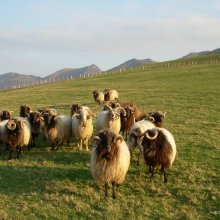
Many travelers enjoy combining a visit to La Rhune with time in one of the region’s traditional villages. From spring through fall, the historic cogwheel train climbs toward the summit of La Rhune, offering wide views over the Basque countryside, the Atlantic coast, and the Pyrenees. Along the route and near the top, it’s common to see pottok ponies, a small, semi-wild horse native to the Basque mountains, grazing freely on the hillsides, as they have for centuries.
In the afternoon, the route often continues to Ainhoa, a village listed among Les Plus Beaux Villages de France. Time here might include:
- Walking along the single main street lined with white houses accented in red or green timbering
- Visiting the Church of Notre-Dame de l’Assomption, with its interior wooden galleries typical of Basque religious architecture
- Noticing the small cemetery nearby, where rounded Basque headstones are carved with traditional symbols
The surrounding countryside is gently rolling and pastoral, especially peaceful outside the peak summer months.


Day 4: Saint-Jean-Pied-de-Port and Espelette
Espelette peppers, Camino heritage, fortified mountain town
This day brings together two very different villages, each closely tied to Basque culture — one through food, the other through history and geography.
Espelette is best known for its AOP-protected red peppers, which are harvested and dried in late summer and early fall. The village itself is compact and easy to explore on foot. Time here often includes:
- Strolling the main street and noticing strings of peppers drying on whitewashed façades in season
- Browsing small shops selling pepper-based products and other regional specialties
- Learning a bit about how the peppers are grown and used in Basque cooking, for those interested in food culture
From Espelette, the drive continues inland toward Saint-Jean-Pied-de-Port, set at the foot of the Pyrenees near the Spanish border. Long an important stop on the Camino de Santiago, the town reflects its strategic and religious past.
Many travelers enjoy:
- Walking along Rue de la Citadelle, lined with stone houses, cafés, and small shops
- Viewing the fortifications above town and passing through the Porte Saint-Jacques, now a UNESCO-listed site
- Taking in views over the surrounding hills that mark the transition toward the mountains
We typically advise on pacing for this day so it doesn’t feel rushed, especially for travelers who enjoy lingering over lunch or exploring at a slower pace.


Day 5: Bayonne
Cathedral cloisters, local markets, Basque chocolate
Bayonne is a lively riverside town and a natural place to end a Basque Country road trip. Its character feels more urban than the surrounding villages, while still remaining walkable and grounded in local life.
Places to visit and things to do in Bayonne include:
- The Cathédrale Sainte-Marie and its cloisters, part of the UNESCO-listed Camino de Santiago route
- The Halles de Bayonne, a covered market where locals shop for ham, cheeses, and seasonal produce
- Discovering Bayonne’s long chocolate-making tradition, introduced by Jewish communities in the 16th and 17th centuries and still alive in small artisanal shops
- Wandering the old town near the rivers, with half-timbered houses and narrow streets
Bayonne works well as a closing chapter to the trip, offering a mix of culture, food, and everyday Basque life before heading onward or home.

©
Unsplash CC0
Best Time for a Basque Country Road Trip
Late spring and early fall are our preferred seasons for the Basque Country.
- May–June and September–early October offer mild weather, greener landscapes, and fewer crowds.
- July and August are lively but busy, especially along the coast, with more traffic and limited parking.
- Winter is quieter and often rainy, but well-suited to food-focused trips, museums, and time spent in towns.
Final Tips
- Make the most of the freedom of a road trip, and allow time for spontaneous stops. Our France tour packages give you flexibility to spend more time in the places you love, and skip other places, if you wish.
- Be sure to try local culinary specialties like Bayonne ham, Basque cheesecake, and Ossau-Iraty cheese, with a glass of Irouleguy wine.
- Pack comfortable shoes for walking in historic towns and along coastal paths, and layered clothing, as the weather can be unpredictable and changeable, even in the summer months.
Why Travel with France Just For You?
At France Just For You, we’ll listen to your wishes and preferences for your trip to France, and craft an itinerary that lets you explore confidently at your own pace by car. We’ll reserve charming B&Bs or boutique hotels that we have tested ourselves, recommend beautiful scenic driving routes and off-the-beaten-path hidden gems, and guide you to unforgettable experiences we think you’ll love.
Contact us today to start planning your perfect Basque Country road trip, or complete the trip planning form below!
Send us your France trip planning form
FAQ
How many days should I spend in the Basque Country?
We recommend spending at least 5 to 7 days in the Basque Country, especially if you would like to include a day or two in Spain too.
With a week, you’ll have time to explore the seaside towns of Biarritz and Saint-Jean-de-Luz, visit typical Basque villages like Ainhoa and Espelette, and enjoy scenic drives along the coast and into the foothills of the Pyrenees.
If you’d like to include time in the Spanish Basque Country too, just let us know when you contact us. We can extend your itinerary to suit your pace and interests.
What is the best season to visit Basque Country?
Spring (May–June) and fall (September–October) are the best time to visit the Basque Country. You’ll enjoy mild weather, fewer crowds, and a more relaxed pace than in the height of summer.
Spring is ideal for walking the coastal paths and exploring Basque villages in bloom, while fall brings warm days, beautiful harvest colors, and culinary festivals, including the Espelette Pepper Festival.
Summer (July–August) is the busiest time, especially along the coast, and the coastal roads. But if you want to book a summer tour, we will do our best to help you avoid the crowds with well-timed recommendations.
Winter is best suited to travelers interested in skiing in the Pyrenees or enjoying the region’s indoor attractions, like its excellent restaurants and museums.
Do I need a car in the Basque Country?
Yes — we believe a car is the best way to explore the French Basque Country. Many of the most beautiful spots are off-the-beaten-track in rural or coastal areas that are not easy (or impossible) to reach by public transport. Having your own car allows you to travel at your own pace, stop at scenic viewpoints, and discover charming villages and local markets that you might otherwise miss.
On our self-drive tours, we take care of car rental (automatic transmission available) and provide you with a personalized itinerary, maps, GPS directions, and support via our MyFrance app, so you can explore with confidence.
What are the best places to visit in the Basque Country?
We've mentioned many of the best places to visit in the Basque Country (on the French side) in this post. These include:
- Biarritz, with its elegant seaside promenade and Belle Époque charm
- Saint-Jean-de-Luz, known for its fishing port, historic church, and royal wedding connections
- Ainhoa and Espelette, two of the most picturesque Basque villages, each with its own character and traditions
- La Rhune, where a scenic mountain train offers panoramic views of the coast and Pyrenees
- Saint-Jean-Pied-de-Port, a medieval town on the Camino de Santiago pilgrimage route
- Bayonne, the chocolate and ham capital of the region, with a well-preserved old town and vibrant cultural scene
If you’re interested in visiting the Spanish Basque Country as well, we’ll be happy to build a custom itinerary that includes highlights like San Sebastián.
What are the most important driving rules Americans should know in France?
Most of our travelers are from North America. Key rules to keep in mind include priority to the right, roundabout etiquette, and speed limits (which are not always sign-posted). Understanding these basics makes driving in France for Americans, and international travelers in general, much more comfortable and enjoyable.