Omaha Beach is one of the most visited D-Day sites in Normandy — and it's free to access year-round. This guide covers what to see, how to get there, and everything you need to plan your visit, from the American Cemetery and Pointe du Hoc to the Omaha Beach Museum, parking, and bus routes.
This long sandy beach stretches as far as the eye can see and remains a silent homage to D-Day and its victims. To really understand what happened here, many of our travelers benefit from visiting with a local guide.
We work with private, English-speaking guides who grew up in the area and bring the history of June 6, 1944 to life. Below, we share a brief history of the Battle of Normandy and the key places to visit near Omaha Beach on a self-guided driving tour of Normandy.
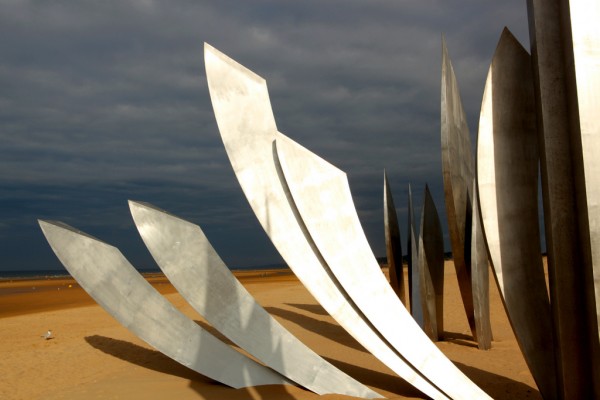
Monument to the Brave Men - sculpture on Omaha Beach - ©FJFY
Best sites to visit near Omaha Beach
- Omaha Beach and Les Braves memorial — free, open year-round
- Normandy American Cemetery, Colleville-sur-Mer — free, open daily
- Omaha Beach Memorial Museum — paid, closed in winter
- Pointe du Hoc — 15 minutes west, free clifftop memorial site
Omaha Beach on D-Day: Historical Background
On June 6, 1944, Omaha Beach was one of five Allied landing beaches used during D-Day, the opening assault of Operation Overlord. It formed part of the American sector, where the assault was led by the U.S. 1st Infantry Division and the 116th Regimental Combat Team of the 29th Infantry Division.
Omaha was the most heavily defended of the five landing areas and saw some of the fiercest fighting and heaviest American losses of D-Day. Rough seas, beach obstacles, mines and intense German fire disrupted the landings, leaving thousands of American troops killed, wounded or missing. Despite these severe losses, the troops fought their way beyond the beach and established a foothold inland. The monuments and preserved sites visitors see around Omaha Beach today help convey the scale and significance of what happened here.
Ranger Battalions at Omaha Beach and Pointe du Hoc
The 2nd and 5th Ranger Battalions were assigned closely connected missions on D-Day. Under Lieutenant Colonel James E. Rudder, Companies D, E and F of the 2nd Ranger Battalion landed at Pointe du Hoc, scaled its approximately 100-foot cliffs and captured the German artillery position overlooking the coast.
Company C of the 2nd Ranger Battalion landed with the first assault wave on Omaha Beach to attack German defensive positions near the western end of the landing area. The 5th Ranger Battalion, commanded by Lieutenant Colonel Max F. Schneider, initially waited offshore with Companies A and B of the 2nd Rangers, ready to reinforce the force at Pointe du Hoc.
When confirmation of success at Pointe du Hoc did not arrive at the expected time, Schneider’s force was redirected to Omaha Beach. The Rangers landed behind the 116th Infantry Regiment, crossed the exposed beach and helped open routes through the German defences before advancing inland. They later reached and relieved Rudder’s isolated force at Pointe du Hoc on June 8.
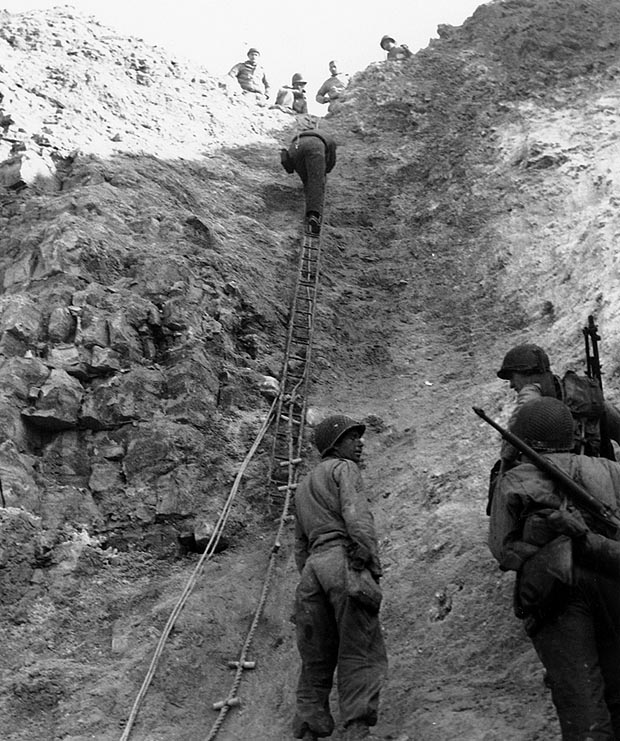
Rangers at Pointe du Hoc, Omaha Beach. Photo: Official U.S. Navy Photograph
What to See at Omaha Beach
The main places to visit around Omaha Beach are spread along several miles of coastline. Start at Les Braves memorial on the beach at Saint-Laurent-sur-Mer, then visit the Omaha Beach Memorial Museum.
Farther east, the Normandy American Cemetery and Visitor Center overlook the beach at Colleville-sur-Mer. Pointe du Hoc, approximately 15 minutes west by car, can be included in the same visit.
- Omaha Beach and Les Braves: Walk on the landing beach and see the striking memorial sculpture.
- Omaha Beach Memorial Museum: Discover uniforms, vehicles, weapons and personal objects connected with the landings.
- Normandy American Cemetery: Visit the cemetery, memorial and visitor centre overlooking Omaha Beach.
- Pointe du Hoc: See the cliffs, German defences, bomb craters and Ranger Monument.
The nearby town of Bayeux has a larger and even more impressive War Museum, with more information about the history of the battle, photo, artillery and other war exhibits. It's worth a visit if you have time.
-
Visiting Omaha Beach independently
If you plan to travel to Omaha Beach alone (i.e. without a tour group or tour guide) you can take a bus to the beach from Bayeux (see below on How to get to Omaha Beach). Please note that the buses are infrequent and don't run at all times of year, so you will need to check these before you travel. You can also drive to the beach and park right in front of the beach at the end of Avenue de la Libération, where there is free parking.
If you plan to visit with a private tour guide (highly recommended) you can ask for them to meet you in Bayeux or at the beach. On our tours of the Normandy landings beaches and WWII battle sites, we normally arrange for our guide to meet you in the morning at your B&B accommodation so that you can travel to the beaches together by car.
-
Visiting Omaha Beach with a guide
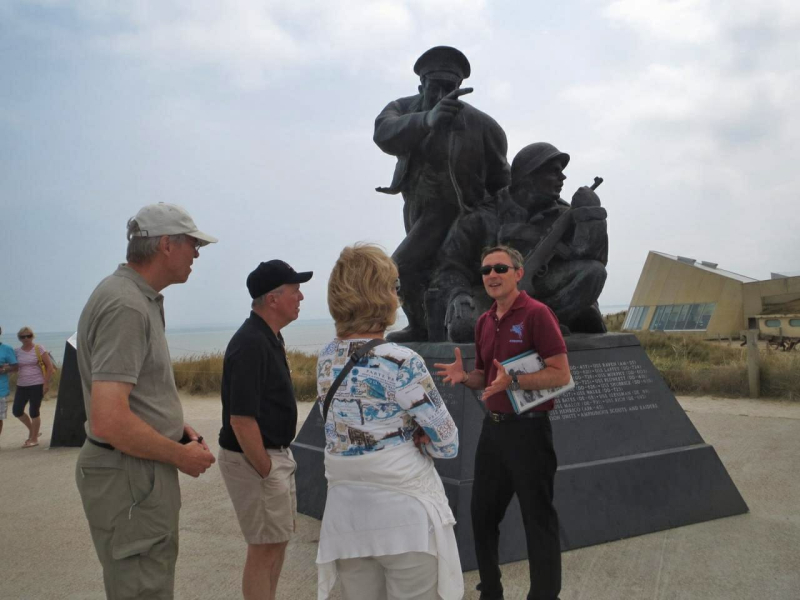
Visiting Omaha Beach with a knowledgeable local guide can help you understand how the events of D-Day unfolded across the landscape. A guide can explain the significance of the beach, memorials and surrounding battle sites, answer your questions and adapt the visit to your particular historical interests.
We recommend staying in or near Bayeux rather than taking a group day trip from Paris, which involves approximately three hours of travel in each direction. On our self-drive tours of Normandy, we can arrange for an English-speaking private guide who we know personally to meet you at your accommodation and accompany you around the landing beaches by car.
We can plan the visit for you, and if there are places you particularly want to visit, we will be sure to include these in your Normandy battlefield tour. If you had an ancestor who fought in the war, we can also research your WWII family history and help you retrace their footsteps, visiting the exact places that they would have been to during the war.
Omaha Beach Memorial Museum
Just 200 metres from Omaha Beach in Saint-Laurent-sur-Mer, the Omaha Beach Memorial Museum tells the story of the American landings of June 6, 1944. Its 1,400-square-metre collection brings that day to life through uniforms, personal belongings, weapons, vehicles, a landing craft and equipment used during the invasion.
Archival photographs, reconstructed scenes and clear, thoughtful displays help you picture what really happened on the beach. Your visit ends with a moving 25-minute film featuring testimony from American veterans. Allow about an hour to take it all in.
If you'd like a broader account of the Battle of Normandy, it's also worth visiting the Battle of Normandy Memorial Museum in Bayeux or the World War II galleries at the Caen Memorial.
Opening hours vary through the year, and the museum closes for the winter, roughly from mid-November to mid-February. In 2026, entry is €7.90 for adults. Do check the Omaha Beach Memorial Museum's official website for current opening times, prices and last admission before you visit.
American Cemetery of Colleville-sur-Mer
The 172.5-acre Normandy American Cemetery overlooks Omaha Beach from Colleville-sur-Mer. It contains the graves of 9,389 American service members, most of whom died during the D-Day landings and the military operations that followed. More than 1,500 additional names appear on the Walls of the Missing.
The memorial includes maps explaining the Normandy landings, a reflecting pool, chapel and the bronze statue Spirit of American Youth Rising from the Waves. The visitor centre uses personal stories, photographs, films, artefacts and interactive displays to explain Operation Overlord and honour those who served. A visit can be profoundly moving, even for travellers without a family connection to World War II.
Admission is free. The cemetery is normally open daily except December 25 and January 1, but opening hours and visitor arrangements can change. Check the official American Battle Monuments Commission website before travelling.
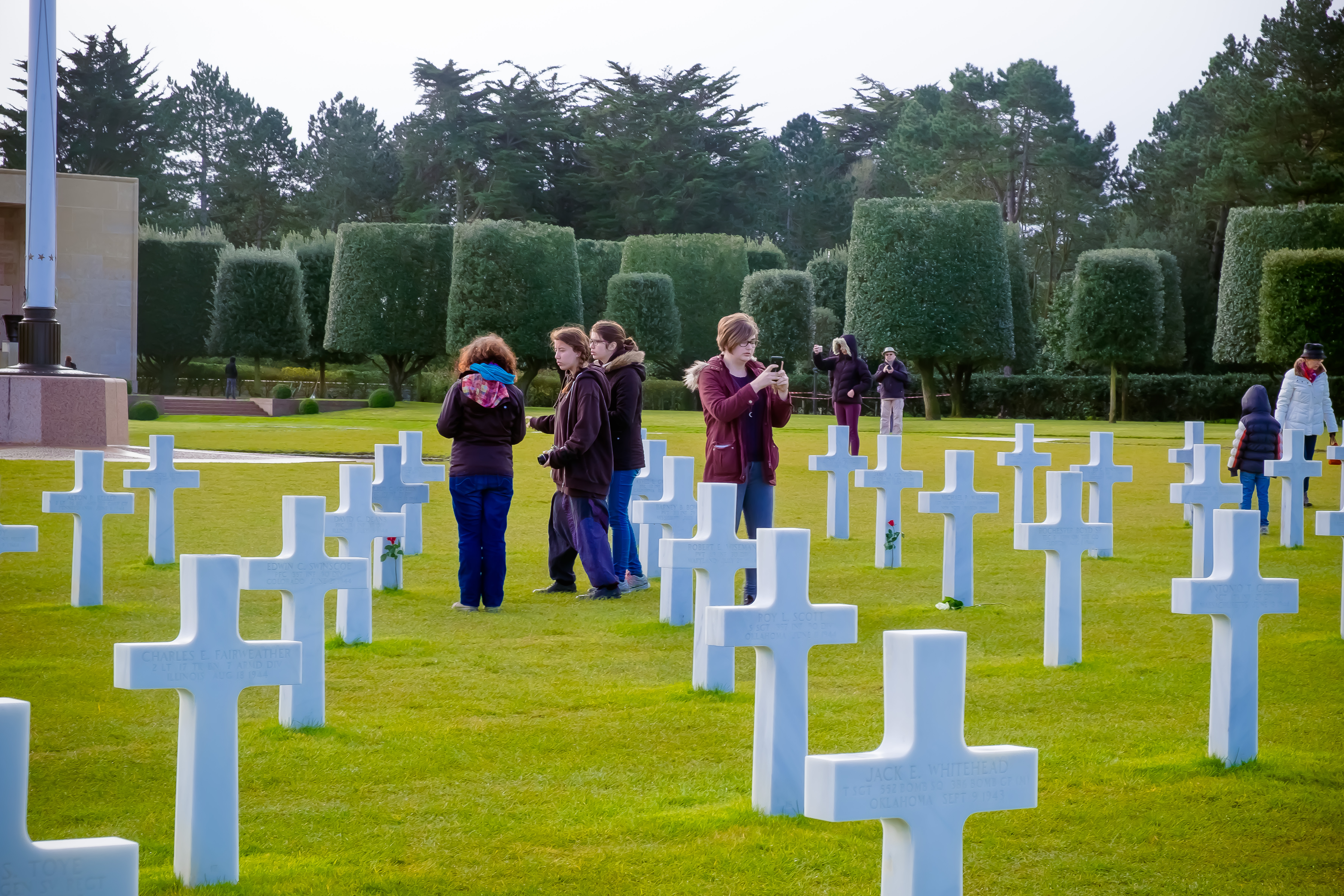
American Cemetery. Photo: CC BY 2.0 (pxhere.com)
Pointe du Hoc
About 15 minutes by car west of Omaha Beach, Pointe du Hoc is a dramatic clifftop D-Day site looking out over the English Channel. German forces had fortified the headland with bunkers and gun positions that threatened the Allied landings at both Omaha and Utah beaches.
On June 6, 1944, U.S. Army Rangers from the 2nd Ranger Battalion, led by Lieutenant Colonel James E. Rudder, scaled the roughly 100-foot cliffs under enemy fire. Their mission was to capture the position and put the German guns out of action before they could be used against the landing forces below.
Today, you can walk among the surviving German bunkers, artillery positions, and enormous bomb craters that still scar the battlefield. The Pointe du Hoc Ranger Monument, a granite pylon standing above a German bunker, honors the Rangers who fought here. Admission is free, though visitors should stay on the marked paths, as the ground is uneven.
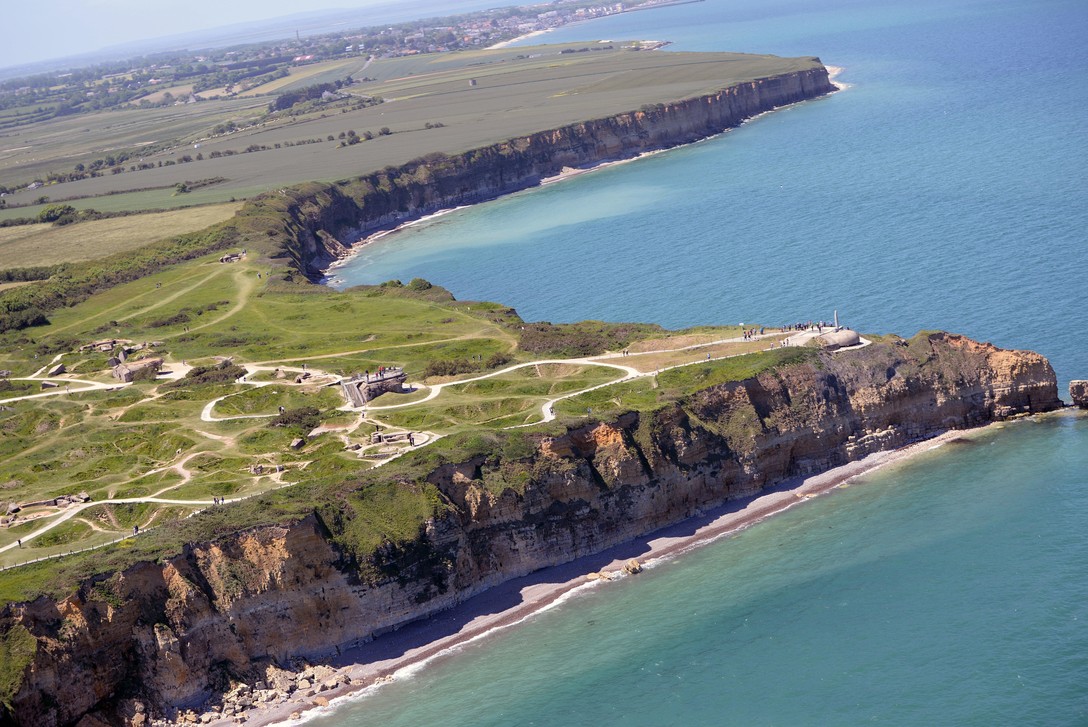
Aerial view of Pointe du Hoc. U.S. Air Force photo by Tech. Sgt. Stacia Zachary
How to get to Omaha Beach
Omaha Beach is approximately 25 minutes by car from Bayeux. Driving is the most flexible option because the beach, cemetery, museums and Pointe du Hoc are spread across several locations. Parking is available near Les Braves at Saint-Laurent-sur-Mer and at the principal museums and memorial sites, although popular car parks can become busy in summer and around D-Day commemorations.
We think exploring Normandy by car is the best option and gives you the most flexibility. This includes visiting the D-Day beaches. However, if you do not have a car, the simplest options are a taxi or a guided visit from Bayeux. Public transport to the D-Day coast can be limited or seasonal, so check the latest Normandy NOMAD timetables before travelling.
From Paris, consider taking the train to Bayeux and continuing from there rather than attempting a rushed return journey by road.
If you would like to find out more about our tours of Normandy, visit our tours page or contact us with your questions.
Self-drive itineraries which include a visit to Omaha Beach:




FAQs
Is Omaha Beach worth visiting?
Yes. Omaha Beach is one of Normandy’s most important and moving D-Day sites. The beach, Les Braves memorial, Normandy American Cemetery and nearby museums help visitors understand both the scale of the landings and their human cost.
Our Normandy battlefield tours can include these sites within a wider exploration of the Normandy coast.
Can you still visit Omaha Beach?
Yes. Omaha Beach is a public beach and can be visited throughout the year. There is no admission charge to walk on the beach. The Omaha Beach museum and Normandy American Cemetery have their own opening hours, so check their official websites before travelling.
How long do you need at Omaha Beach?
Allow at least half a day to visit the beach, Les Braves and Normandy American Cemetery. A full day is better if you also want to visit the Omaha Beach Memorial Museum and Pointe du Hoc.
Our private Normandy tours can be adapted to your interests and the amount of time you have available.
Can you visit Omaha Beach without a tour?
Yes. You can visit independently, and travelling by car gives you the most flexibility because the principal sites are spread along the coast. Our self-drive battlefield tours in Normandy provide a planned route and detailed travel information while allowing you to explore at your own pace.
How do you get to Omaha Beach from Bayeux?
Omaha Beach is approximately 25 minutes from Bayeux by car. You can drive, take a taxi or arrange a guide from Bayeux. Public transport can be limited or seasonal.
Our tours of the Normandy beaches with a private guide are a convenient option for travellers who would prefer not to explore the sites alone.
What should you see when visiting Omaha Beach?
The essential sites are:
- Omaha Beach and Les Braves
- The Omaha Beach Memorial Museum
- Normandy American Cemetery
- Pointe du Hoc
Our self-drive WW2 battlefield tours can combine these places with other important D-Day sites, including Juno, Sword, Gold or Utah Beach, Arromanches and Sainte-Mère-Église.
Where can you park at Omaha Beach?
Free parking is available near the seafront and Les Braves at Saint-Laurent-sur-Mer. The Normandy American Cemetery and the principal museums also have visitor parking. Spaces can be busier in July, August and around June 6, so arrive early when visiting at peak times.